Braumanufaktur Forsthaus Templin – Weizen

GS6A8584

In southern Germany in Potsdam near the Templiner lake is the brewery Braumanufaktur Forsthaus Templin. Founded in 2007 by brewer Jörg Kirchhoff and Thomas Köhler and producing bio-dynamic beers.

I bought this beer at Torvehallerne in Copenhagen, Denmark at the price of 4,5 Euro for a 500 ml bottle at 4,8%.

Thick flowing porridge structure and real good looking orange in the colour.

A head that disappears just as fast as you can pour the beer into the glass.

Light sweet fruit in the aroma.

Good CO2, full bodied sweet fruit with a long and pleasant after taste. Biodynamic / organic beer.

Overall rating 85 / 100

Quarles Harris Vintage Port 1994

GS6A0110

Quarles Harris was founded in 1680 by Thomas Dawson and this early date makes it one of the oldest port houses. It was named Dawson & Harris when Quarles Harries married Dorothea Dawson in 1752. It was once again renamed in 1791 to Harris Stafford & Sons and already in 1792 to Quarles Harris & Co. The company was bought by Andrew James Symington in 1917 and remain to this day as a part of the Symington family’s large portfolio of port houses.

Estimated cost of this Quarles Harris Vintage Port 1994 bottle of 750 ml is 52 Euro.

Taste notes right after decanting

Deep dark amber and orange play in the colour

Good aroma with a spiced and mature fruit. Suitable in strength with a hint of alcohol.

Light bodied with a mild taste to it, fine after taste with a pleasant dried fruits in the end, a wine that seems mature.

Intermediate rating 89 /100

GS6A0111

GS6A0113

2.5 hours after decanting

Dark red and really took some change from the air.

Suitable aroma that can be scented from a great distance.

Mild tannin, sweet fruit and a warmth in the end.

Wine was poured back in the bottle to slow the process of decanting.

GS6A0117

GS6A0115

7.5 hours after decanting

The dark red colour seems to have gotten a even deeper dimension.

Aroma lost some of its fruitfulnes but is now hot and spiced.

Soft tannin, sweet darkness that goes straight over in a full forced dried fruits that lasts forever with a wonderful after taste.

Final rating 90 / 100
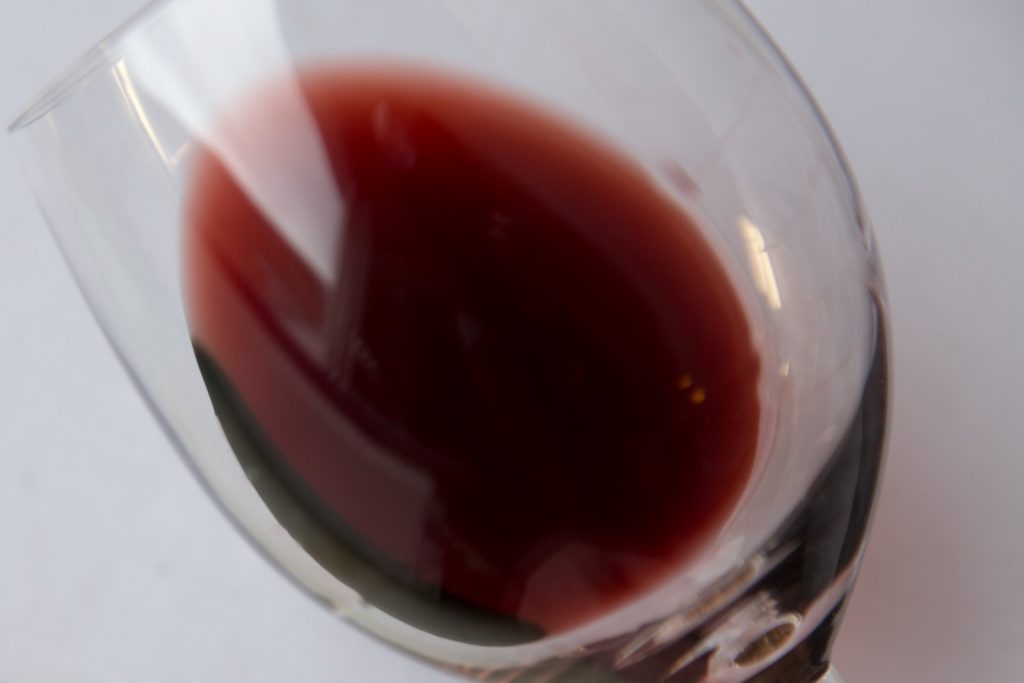
GS6A0120

24 hours after decanting

Smooth and very easy to drink, it is just like drinking a liquid raisins.

Overall rating 90 / 100

Real Companhia Velha Royal Oporto Vintage Port 1985

GS6A9811

Real Companhia Velha was founded on the 10th of September 1756 by Royal Charter of King D. José I, under the auspices of his Prime Minister, Sebastião José de Carvalho e Melo, the Count of Oeiras and Marquis of Pombal. By 1781 the company was known as Royal Oporto in England. In 1960, with the support of the banker Pinto de Magalhães, Manuel da Silva Reis acquires the majority of the company and assumes its leadership.

Estimated cost of this Real Companhia Velha Royal Oporto Vintage Port 1985 bottle of 750 ml is 35 Euro.

1.5 hours after decanting

Medium clarity with a red to red-brown tint in the colour

Faint aroma with a sense of the ordinary, alcohol and some spices to it.

Light to medium body, refreshing tannin with a suitable length of after taste. It is however going from mature to old. It is out of balance between fruit and tannin, aged beyond what is good for it.

Intermediate rating 80 /100

GS6A9818

6 hours after decanting

Darker in the colour.

Much less alcohol in the aroma.

Better balance between tannin and the thin fruit and faint dried fruits, alcohol is not dominant but more on the tame side. Taste of old barrels and the scent of a old living room comes in, not spiced but slightly old. Better balanced, but has to be consumed now.

Final rating 86 / 100

GS6A9814

12 hours after decanting

Seems more like a 10 year old Tawny by now, tannin is almost gone.

GS6A9812

30 hours after decanting

Turned completely brown in colour, sweet as raisins, smooth as silk with even more heavy dried fruits to the taste. All alcohol is gone and after taste lasts longer. It has now transformed itself into a old tawny.

Overall rating 86 / 100

Quinta Das Carvalhas LBV – Late Bottled Vintage 2010

GS6A9845-2

Real Companhia Velha was founded on the 10th of September 1756 by Royal Charter of King D. José I and have produced port ever since.

Quinta das Carvalhas is a property in the Douro Valley. Written references regarding this vineyard can be traced back to 1759.

Estimated cost of this Late Bottled Vintage from 2010 bottle of 750 ml is 25 Euro.

GS6A9846-2

Medium clarity of this black to dark red port.

Forceful and suitable aroma, spicy in a good way and pure in the nose.

Medium bodied, yet dry and alive from tannin. Sweet fruit in the end.

Light body, dry but still within what is suitable, good fruit that is harmonic with a fine after taste of raisins. A good ready to drink wine that does a overall fine impression on balance.

Overall rating 88 / 100

Blandy’s Madeira Bual 10 years

GS6A9512

Blandy’s Madeira Wine was founded in 1811 by John Blandy that came to Madeira to be treated for his illness in the warm climate and to work in the banking sector. The company is still on family hands and is today run by the 6th generation.

I got this 19%, 500 ml bottle of Blandy’s Madeira Bual 10 years as a gift. Approximate value is around  31 Euro.

The bual grapes are used for the medium sweet wines.

Dark orange and amber in the colour, with play of yellow tones. Heavy curtains on the side of the glass after a slinging, slowly descending.

A aroma that is heavy on the dried fruits, sweet with a nice scent of burned caramel but also with some alcohol in it.

Good body with a faint hint of oak from the barrels, good warmth, some alcohol and sweet raisins in the after taste, a good mix of dried fruits.

Overall rating is 89 / 100

Schneider Weisse – Tap 4 – Mein Grünes

GS6A9263

Georg I Schneider was the creator of the Schneider Weisse Original recipe, which is still used today. Two-hundred years ago, wheat beer could only be brewed by the Bavarian royal family in their breweries. In 1872, King Ludwig II discontinued brewing wheat beer due to a steady decline in sales.

Georg I Schneider was sold the exclusive right to brew wheat beer. Today, Georg VI Schneider is running the brewery in Kelheim, which the family acquired in 1927 and has remained the Schneider Weisse brewery to this day. It is the oldest wheat beer brewery in Bavaria. Wheat beer has been brewed there without interruption since its founding in the year 1607.

I bought this unfiltered weissbeer from a German webshop at the price of 1,49 Euro for a 500 ml bottle at 6,2%.

Beautiful orange colour and very coarse haziness.

Small head that is gone in a short moment.

Fresh and hoppy aroma with a sweet fruit to it.

Medium CO2, flowery like a spring field in peak, sweet fruit and some slight bitter hops in the after taste. Organic beer which is a plus but it is also in the sharp end of the flower taste scale.

Overall rating 79 / 100

Thisted Bryghus – Ingefær

GS6A9893

Thisted Bryghus was founded in 1908 where it bought up the broke Thisted Aktiebryggeri that had existed for a mere 10 years before it had to close. The brewery is mainly owned by local people holding shares in the brewery. Thisted bryghus is located in Thisted in Denmark.

I found this beer at a local supermarket in Denmark at the price of 2,5 Euro for a 500 ml bottle with a strength of 4,5%.

Bright light yellow almost going into the white spectrum in the colour of this wheat beer.

Small head.

The aroma is some weird composite mix of ginger, dishwasher water and soap.

Good CO2, a very special ginger mixed with wheat taste. Slightly bitter and hoppy with a much flowery or almost soap like after taste.

Overall rating is 65 / 100

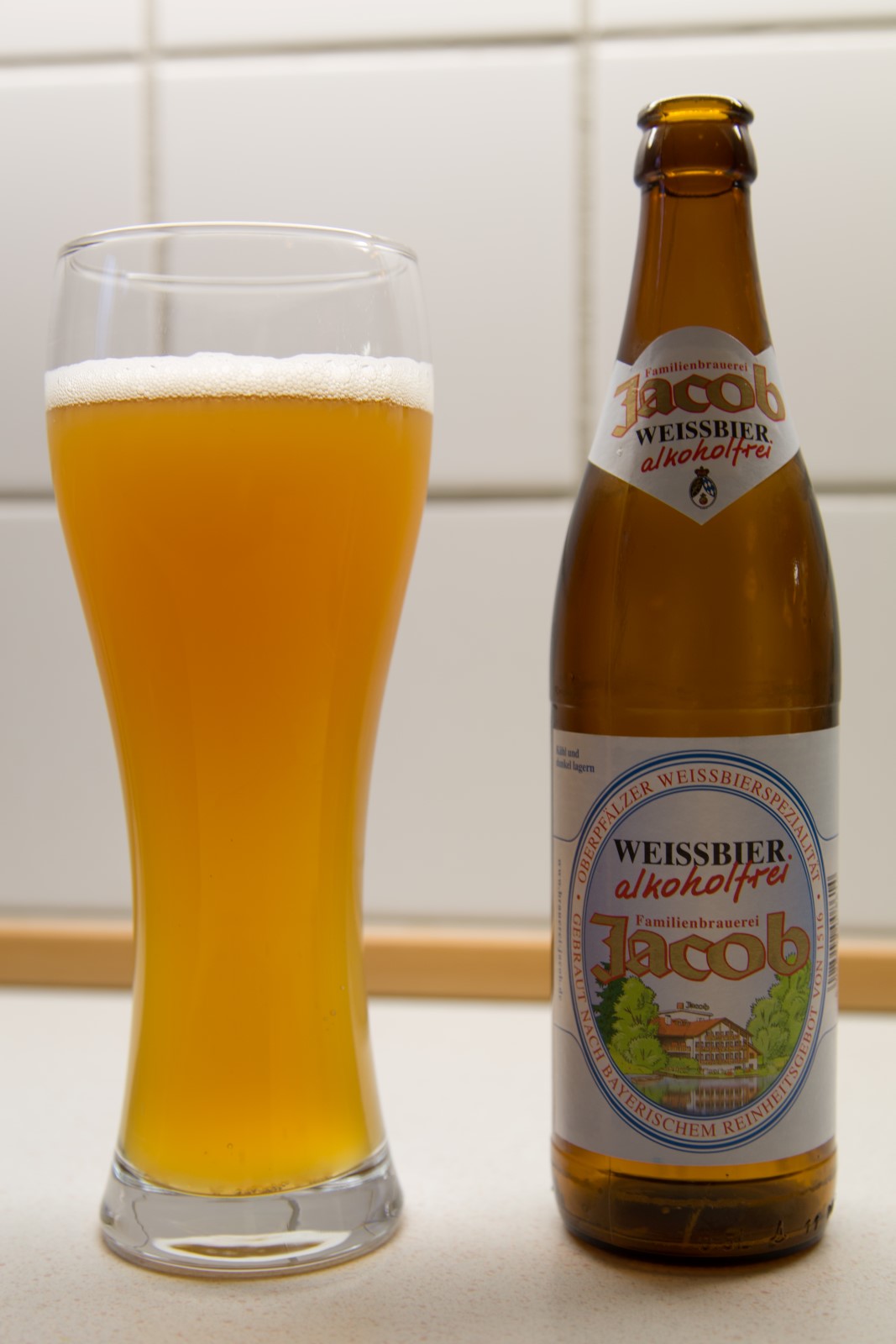
Jacob – Weissbier Alkoholfrei

GS6A9422

In 1738, the workers of the smelting work in Bodenwöhr, Bayern, Germany requested permission from Karl Albrecht, Elector of Bavaria, to establish a brewhouse so that they would no longer need to import the brews of a somewhat inferior quality from nearby towns. The first master brewer, Peter Still from Fischbachbegan his work in 1758, so some twenty years later.

In 1759 Peter Still died and while it was a state owned it was decided to privatize the brewery, which happened in 1804. In 1884, Johann Baptist Jacob – the great-grandfather of present-day owner, Marcus Jacob – acquired the company.

I bought this unfiltered weissbeer from a German webshop at the price of 1,49 Euro for a 500 ml bottle at 0,0%.

good looking yellow going slightly into orange in the colour.

Small head that is quickly gone.

Vegetables and wheat in the aroma, generally lacks fruit and sweetness.

Hard and front running CO2 with a sharp wheat in the taste, nothing more to add to that.

Overall rating 65 / 100

Jacob – Weissbier

GS6A9361

In 1738, the workers of the smelting work in Bodenwöhr, Bayern, Germany requested permission from Karl Albrecht, Elector of Bavaria, to establish a brewhouse so that they would no longer need to import the brews of a somewhat inferior quality from nearby towns. The first master brewer, Peter Still from Fischbachbegan his work in 1758, so some twenty years later.

In 1759 Peter Still died and while it was a state owned it was decided to privatize the brewery, which happened in 1804. In 1884, Johann Baptist Jacob – the great-grandfather of present-day owner, Marcus Jacob – acquired the company.

I bought this unfiltered weissbeer from a German webshop at the price of 1,49 Euro for a 500 ml bottle at 5,3%.

Thick yellow but also slightly over in the orange spectrum.

Great big head with the finest of finest top.

Medium sweet fruit aroma with a hint of hops and wheat.

Good CO2, sweet fruit, good balance with a play between the hops and wheat.

Overall rating 83 / 100

Jacob – Leichtes Weissbier


GS6A9423

In 1738, the workers of the smelting work in Bodenwöhr, Bayern, Germany requested permission from Karl Albrecht, Elector of Bavaria, to establish a brewhouse so that they would no longer need to import the brews of a somewhat inferior quality from nearby towns. The first master brewer, Peter Still from Fischbachbegan his work in 1758, so some twenty years later.

In 1759 Peter Still died and while it was a state owned it was decided to privatize the brewery, which happened in 1804. In 1884, Johann Baptist Jacob – the great-grandfather of present-day owner, Marcus Jacob – acquired the company.

I bought this unfiltered weissbeer from a German webshop at the price of 1,49 Euro for a 500 ml bottle at 2,7%.

Dark orange to brown in this hazy beer that features a amber colour spectrum.

Small head with a fine top, gone in a short moment.

Lovely sweet fruit aroma with a hint burned sugar.

Forceful CO2, but with a thin fruit, sweet and slightly bitter wheat in the after taste.

Overall rating 72 / 100